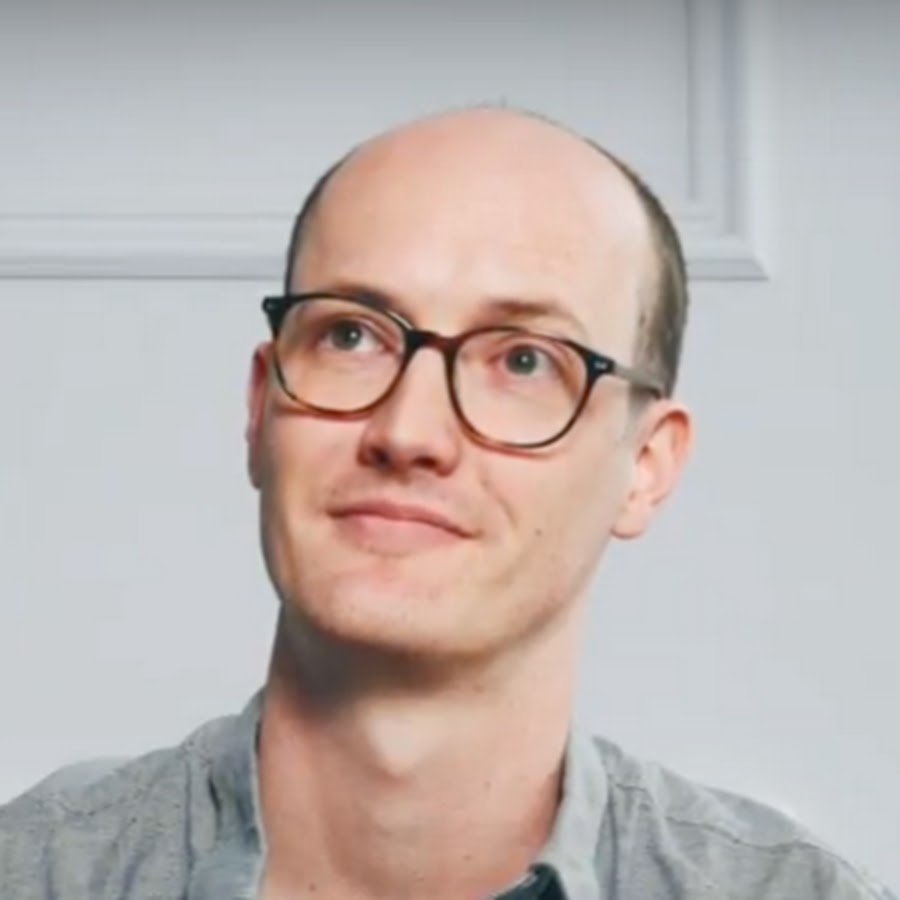
I'm gonna miss coding
Theo responds to Lauren's post that coding is dead, agrees that writing code by hand is already gone, and argues that the curiosity and skill that got people into programming still matter, even if the typing does not.


What we do
Brevity is the soul of insight. We take top creator content and give you the GOLD from every upload.
Explore the takesThe reading room
15 takes to explore
Theo responds to Lauren's post that coding is dead, agrees that writing code by hand is already gone, and argues that the curiosity and skill that got people into programming still matter, even if the typing does not.
In Y Combinator’s first debate, Jacob Coxon argues that a superhuman AI researcher around 2027, then rapid automation of other work by 2028, is reason for governments to slow frontier AI, while Robin Hanson argues that intelligence is not one number and that new technologies typically take decades to reshape the economy; the audience votes Coxon the winner.

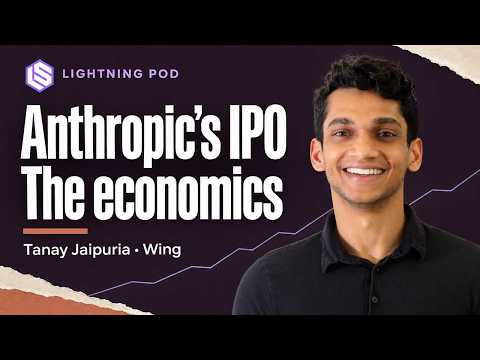
In a lightning pod recorded ahead of Anthropic's IPO, the host walks through a $70 to $78 filing range and an $81 billion October run-rate, then talks with Tanay Jaipuria of Wing about capital efficiency, margins, and whether Anthropic can extend beyond Claude Code without the cost of a large free consumer base.
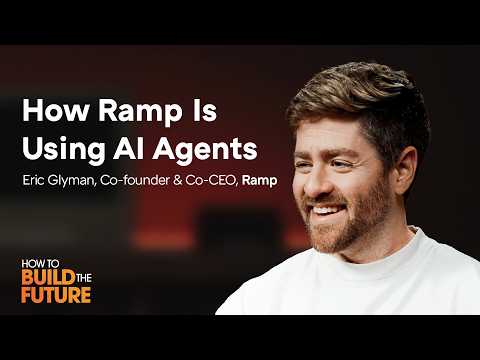
Ramp co-founder Eric Glyman tells Garry Tan that a 1%/80% split in AI-token use, including inside Ramp, has created 100x engineers, and that the company paused hiring for a quarter, built internal tools such as Inspect and Glass, and is now starting to offer Glass to customers.
In a short clip from Matt's live interview with the creators of Pi, Mario Zechner argues that the industry is trying to scale away from understanding, and that this becomes dangerous the moment something goes wrong.
Dwarkesh Patel argues that recursive self-improvement has already begun, that systems may soon match the best human AI researchers, and that automating that work could compress years of progress into one year, while walking through the evidence and the remaining objections, including continual learning.
Theo argues that almost all real coding work should be done with Opus 5.5 or Fable 5.2, then explains how he uses the thorough, eager model for most work and the quicker, lazier one when a problem needs a sharp shortcut.
Theo reviews Fable 5.2 and argues that Anthropic now holds both the clever frontier model and the everyday workhorse, even though Fable is not a large enough jump to replace Opus 5.5 for most of his work.
Fireship recaps OpenAI research that used a swarm of agents and a model it later revealed as GPT-6 Cyber to hunt local privilege-escalation bugs in the latest Linux kernel. He walks through the pipeline, the cost, a comparison with an earlier run, and the advice to keep systems patched, while noting that the model is not available to the public.
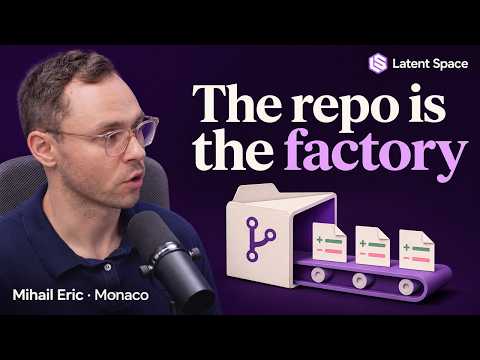
Mihail Eric, who teaches Stanford's CS 146S and is head of AI at Monaco, tells Latent Space how his course has shifted from a survey of coding agents to context engineering and architecture in large repos, and discusses what it would mean for those repos to become software factories.
Francois hosts a YC Paper Club on AI for biology, opening with a live, informal Turing-test demo, then hears from speakers including Alfredo Gonzalez on cancer as a data problem as sequencing costs fall, and Yusuf Roohani on virtual-cell models and the remaining gap in choosing the right biological targets.
Paul Graham talks with Replit CEO Amjad Masad about how the company moved from autocomplete and users pasting ChatGPT into the editor to a 2024 coding agent, why they now talk about a self-driving company rather than vibe coding, and Masad's claim that some $10 million software projects are being done for $250,000 on Replit.
Showing 12 of 15
FAQ
What the site is, and how the entries are written.
A site that covers new AI and developer YouTube videos. Each video gets one entry, and the entry helps you decide whether the video is worth your time.